The best time to visit Morocco is spring (March–May) and autumn (September–November), when days are warm, nights are mild and the desert is comfortable. April and October are the two strongest months overall. Summer is genuinely hot inland; winter is beautiful but cold at altitude and in the desert at night — with the lowest prices of the year.
Morocco isn't one climate
This is the part most guides skip. On a single multi-day tour you can pass through four distinct climates in a day, so "the best time" depends as much on where you're going as when:
Sahara & Merzouga
Best: Oct–early Nov & Mar–AprComfortable days for camel treks and tolerable camp nights. Winter works with warm layers; midday June–August is too hot for the deep desert.
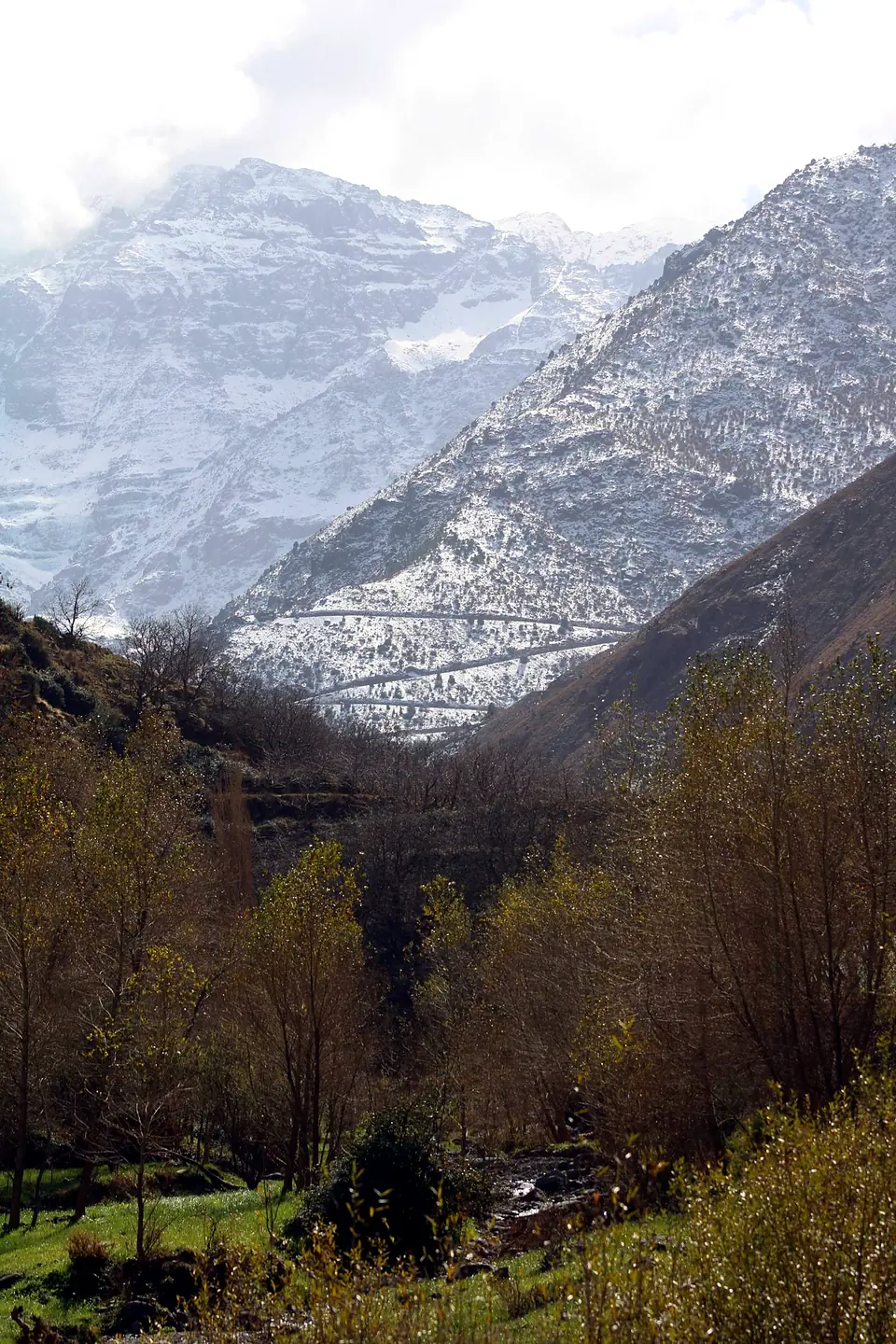
Atlas Mountains
Trekking: Apr–Jun & Sep–OctClear trails and green valleys in spring and autumn. High peaks hold snow into late spring; Oukaïmeden even offers skiing in January–February.
Atlantic coast
Best: Jun–SepEssaouira and Agadir stay mild and breezy while the interior bakes — the natural summer escape. Expect steady Atlantic wind year-round.
Imperial cities
Best: Mar–May & Sep–NovMarrakech, Fes, Meknes and Rabat are most comfortable in the shoulder seasons. July–August sightseeing means very early starts to beat the heat.
The thing that surprises people most: the desert is cold at night. Even in spring, a night in the Erg Chebbi dunes can drop close to single figures. Pack layers regardless of season — see our packing guide.
Morocco month by month
A quick-scan view of what each month feels like in the cities and the desert, how busy it gets, and what it suits best.
| Month | Cities & coast | Sahara / desert | Crowds | Best for |
|---|---|---|---|---|
| January | Cool days 16–19°C, cold nights, some northern rain | Clear mild days ~18°C, near-freezing nights | Low | Low prices, Atlas snow, quiet medinas |
| February | Cool, warming late; almond blossom | Crisp, dry, cold nights | Low | Budget trips, clear desert skies |
| March | Spring begins, 20–23°C, green landscapes | Excellent — mild days, cool nights | Rising | All-round travel, desert |
| April | Peak spring, 22–26°C, ideal everywhere | Ideal — warm days, comfortable nights | Busy | Everything — a top month |
| May | Warm 26–29°C, dry and bright; Valley of Roses | Warm, heating toward summer | Busy | Cities, Atlas, early-season desert |
| June | Hot inland 33–38°C; coast mild | Very hot by day; fine at dawn/dusk | Moderate | Coast, High Atlas trekking |
| July | Very hot 38–42°C in Marrakech; coast breezy | Extreme midday heat | Moderate | Essaouira & Agadir coast only |
| August | Hottest inland; coast at its peak | Extreme midday heat | Coast busy | Atlantic coast, mountains |
| September | Cooling, 30–34°C, bright and dry | Good again from late month | Rising | Cities, late-month desert |
| October | Prime autumn, 25–28°C, ideal | Ideal — the best desert month | Busy | Everything — a top month |
| November | Mild 20–23°C, first northern rains | Excellent, cooler nights returning | Moderate | Desert, cities, fewer crowds |
| December | Cool 16–19°C, festive; snow in the Atlas | Clear days, cold nights | High late Dec | Winter sun, holidays, Atlas snow |
Season by season
Spring (March – May): the all-round favourite
Warm but not punishing in Marrakech, comfortable in the desert, wildflowers in the Atlas, and the Valley of Roses in bloom around late April and May. This is peak quality and, unsurprisingly, the busiest and priciest of the two shoulder seasons — book private tours and accommodation a few weeks ahead, especially around Easter.
Summer (June – August): hot inland, lovely on the coast
Marrakech regularly passes 40°C and the Sahara can exceed it. Desert tours still run — early starts, long shaded lunches, cooler evenings — but they're demanding. If you're travelling in summer, the coast at Essaouira is your friend, and a longer itinerary that includes the Atlantic makes far more sense than a short desert dash.
Autumn (September – November): quieter, and just as good
September still carries summer heat; October and November are excellent. Fewer crowds than spring, and prices soften. November is our quiet favourite — clear desert skies and comfortable city days.
Winter (December – February): cold nights, brilliant light
Marrakech is mild by day and chilly at night. The Atlas passes see snow, and desert nights are properly cold. But the light is superb, the medinas are calm, and prices are at their lowest. Bring a warm jacket for the camp. A note on Ramadan, which shifts each year on the lunar calendar: travel is entirely possible and can be memorable, but expect reduced daytime hours at some restaurants and a quieter daytime atmosphere. Tours run normally — ask us for your specific dates.
Best time for a Morocco desert tour
If the Sahara is the centrepiece of your trip, aim for October to early November or March to April — the two windows that balance warm days for camel treks with manageable nights at Erg Chebbi. Winter desert trips are rewarding for the clear skies and low prices, but pack seriously for the cold. Our private routes run year-round and adapt to the season: warmer camps and layered gear in winter, earlier desert starts in the shoulder of summer.
Once you've picked your window, our guide to how many days you need in Morocco will help you shape the trip itself, and how much a Morocco tour costs covers the budget.
Frequently asked questions
What is the best month to visit Morocco?
April and October are the two best all-round months — warm days, comfortable desert nights and manageable crowds. Both sit in Morocco's peak shoulder seasons: spring (March–May) and autumn (September–November). March, May and November are close behind.
Is it too hot to visit Morocco in summer?
Inland cities and the Sahara are very hot in July and August, often above 40°C. Tours still run with early starts, but if you're travelling then, weight your itinerary toward the Atlantic coast — Essaouira and Agadir stay mild and breezy — and the cooler High Atlas.
What is the best time for a Morocco desert tour?
October to early November and March to April. You get comfortable daytime temperatures for camel treks and tolerable nights in camp. Avoid midday desert travel in June to August, when the heat is extreme.
How cold is the Sahara desert at night?
Cold enough to need a jacket in every season. In winter, desert nights can approach freezing. Camps provide heavy blankets and heating, but warm layers are essential year-round.
Is winter a good time to visit Morocco?
Yes, if you don't mind cold nights. Days in Marrakech are mild, the medinas are peaceful, the light is beautiful and prices are lowest. The High Atlas sees snow — pack for genuine cold in the mountains and the desert.
Does it rain much in Morocco?
Not much, and mostly between November and March, chiefly in the north and on the coast. The desert and the south are dry almost year-round.
When is the cheapest time to visit Morocco?
Mid-winter — January and February — outside the Christmas and New Year peak. Accommodation is cheaper and the main sites are quiet. The trade-offs are cold desert nights and the chance of rain in the north.
Planning around specific dates?
Tell us when you're coming and we'll tell you honestly what the weather will be like — and which itinerary suits that season best.
Related guides
How Many Days Do You Need in Morocco?
What you can realistically see in 2, 3, 5, 7, 10 or 15 days — and which length fits your trip.
What to Pack for a Morocco Multi-Day Tour
A practical list built around desert nights, medina walking and mosque visits.
How Much Does a Morocco Tour Actually Cost?
Real 2026 prices for shared and private multi-day tours, plus what drives the number up or down.