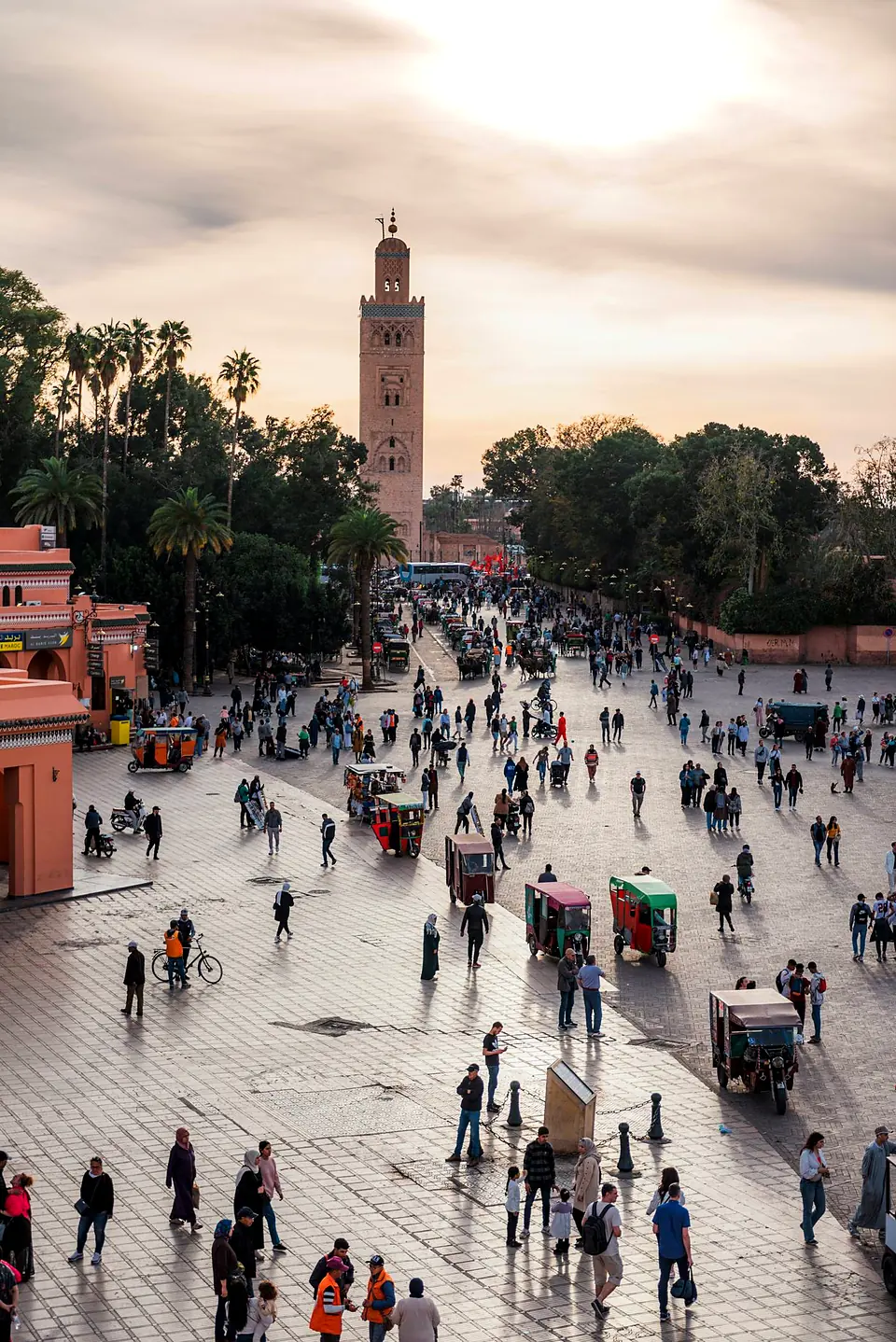
Morocco welcomes millions of international visitors who come to explore Marrakech, Fes, Chefchaouen, the Atlas Mountains, the Sahara Desert and the Atlantic coast. For most travelers, visiting Morocco is straightforward when normal travel precautions are followed.
Like any destination, it helps to understand local customs, transport, tourist areas and common situations you may encounter before you arrive. This guide explains the practical safety issues travelers should consider when planning a trip to Morocco.
Important: Travel conditions and official advisories can change. Before travelling, always check the latest guidance issued by your own government or foreign ministry.
Is Morocco safe for tourists?
Morocco has a well-developed tourism industry, particularly in Marrakech, Fes, Casablanca, Rabat, Chefchaouen, Essaouira, Merzouga and Ouarzazate. Tourists routinely travel between these cities by train, private transfer, rental car and organized tours.
The most common issues visitors encounter relate to petty theft, aggressive selling, unofficial guides, pricing misunderstandings and transport arrangements, rather than serious incidents. Using established accommodation, reputable transport providers and licensed or experienced local operators makes the trip much easier.
Is Marrakech safe?
Marrakech is one of Morocco's busiest tourism cities. Popular areas such as Jemaa el-Fnaa, the Medina, Gueliz and the major attractions receive large numbers of visitors every day. The main things to watch for are:
- pickpocketing in crowded places
- unofficial guides offering unsolicited help
- unclear taxi pricing
- overly persistent sellers
- people offering directions and later requesting money
These situations are usually more inconvenient than dangerous. Keep valuables secure, agree prices beforehand, and avoid following strangers into unfamiliar streets if you feel uncomfortable.
Is Fes safe?
Fes is famous for its historic Medina, which is larger and more complex than Marrakech's. The main challenge for first-time visitors is navigation — the narrow streets can be confusing, and some visitors choose to explore with an official guide on their first day. You don't need a guide simply to visit Fes, but a reputable one can help you understand the city's history and avoid spending your time trying to find your way.
Is the Sahara Desert safe to visit?
Travel to Morocco's Sahara regions is a major part of many multi-day itineraries. Popular routes connect Marrakech or Fes with Aït Ben Haddou, Ouarzazate, the Dades Valley, Todra Gorge, Merzouga and Erg Chebbi.
For a desert trip, the more important practical consideration is choosing a reliable transport and tour provider. The distances are long — particularly between Marrakech and Merzouga. Before booking, check the exact itinerary, driving times, accommodation, what meals are included, the desert camp category, the vehicle type, whether the trip is private or shared, and the pickup and drop-off arrangements. For desert travel, good organization is as important as the destination itself.
Planning a Sahara trip?
A private, well-organized route removes most of the uncertainty — one driver, a clear itinerary and no surprises.
Is Morocco safe for solo travelers?
Many travelers visit Morocco alone. Solo travelers should take the same precautions they would in any unfamiliar destination:
- avoid displaying large amounts of cash
- keep valuables secure
- use trusted transportation at night
- send accommodation details to someone you trust
- avoid poorly lit or deserted areas late at night
- confirm transport arrangements in advance
Solo travelers may receive more attention from sellers or people offering assistance than those in groups. A polite but firm refusal is usually sufficient.
Is Morocco safe for women travelers?
Women travel independently throughout Morocco, but experiences can vary depending on destination, clothing, time of day and situation. Some women may experience unwanted attention, particularly in crowded tourist areas. Practical precautions include:
- choosing centrally located accommodation
- avoiding isolated streets late at night
- arranging airport transfers in advance when arriving late
- using established transport services
- dressing in a way that respects the local environment
- ignoring persistent comments rather than engaging
Women traveling alone may also prefer private transportation for longer journeys between cities. Our guide to traveling to Morocco as a woman covers this in more depth.
Is Morocco safe for families?
Morocco is a popular destination for families because itineraries can combine cities, mountains, desert landscapes and coastal destinations. When traveling with children, pay particular attention to long driving distances, child seats, hotel accessibility, desert temperatures, food and hydration, walking distances inside Medinas, and pool and accommodation safety.
Families planning Sahara tours should avoid fitting too much driving into a very short itinerary — a slower itinerary is often more comfortable. Our guide to how many days you need in Morocco can help you pace it.
Common tourist scams and annoyances
Most tourist problems in Morocco are relatively small but can still affect your experience.
Unofficial guides
Someone may claim a street, attraction or market is closed before offering to show you another route. You are not obligated to follow them.
Taxi pricing
Where meters aren't used or a fixed price applies, confirm the price before starting the journey.
Directions in the Medina
Someone may offer directions and later request payment. If you need help, asking your riad, hotel, restaurant or official guide is usually easier.
Shopping pressure
Negotiation is common in some markets. If you're not interested, simply decline and keep walking.
Tour offers
Avoid choosing a multi-day tour purely because someone offers the lowest price. Ask exactly what the price includes before paying.
How to choose a safe and reliable Morocco tour operator
For longer routes and Sahara tours, ask the operator for clear information before booking. Check the full itinerary, accommodation names or categories, vehicle type, whether transport is private or shared, meals and activities included, cancellation conditions, pickup location, final drop-off, and reviews and business information.
A professional operator should be able to explain the itinerary clearly rather than simply quoting a price. If you're weighing formats, our comparison of private vs group tours in Morocco and our guide to Morocco tour costs both help. See our guide to how to choose a reliable Morocco tour operator.
Driving in Morocco
Road conditions vary considerably. Major highways between large cities are very different from mountain roads or desert routes. Travelers considering a rental car should think about unfamiliar traffic rules, navigation, parking, mountain driving, long distances, night driving and speed controls. For complicated multi-city itineraries, many travelers compare self-driving with hiring a private driver. See private driver vs car rental in Morocco for a full comparison.
Should you carry cash?
It's useful to have some Moroccan dirhams for small purchases, taxis, tips, markets, cafés and rural areas. Cards are widely accepted in many hotels and larger businesses, but cash remains useful. Avoid carrying all your money in one place.
Emergency preparation & "is Morocco safe right now?"
Before traveling, save your accommodation phone number, your tour operator contact, travel-insurance details, passport copies, emergency contact information and your country's embassy or consular contact. Keep digital copies of important documents separate from the physical ones.
Whether Morocco is safe "right now" changes over time. Security conditions, weather events, transport disruptions and government travel advice can all change. For that reason, always check the current official travel advisory issued by your own government before departure.
Frequently asked questions
Is Morocco safe for tourists?
Most visitors travel throughout Morocco without serious problems, but normal precautions regarding valuables, transportation and unfamiliar areas are recommended.
Is Morocco safe for Americans?
American travelers visit Morocco regularly. Travelers should check the latest official US travel guidance before departure because government advisories can change.
Is Marrakech safe at night?
Busy tourist areas remain active in the evening, but travelers should be more cautious in quiet or unfamiliar streets and use reliable transportation when necessary.
Is Morocco safe for solo female travelers?
Women travel independently in Morocco, although some may experience unwanted attention. Choosing reputable accommodation and transportation and exercising normal precautions can make travel easier.
Is the Sahara Desert safe for tourists?
The main tourist areas around Merzouga and Erg Chebbi are part of established Morocco itineraries. Travelers should book with reliable transport and accommodation providers and understand the long driving distances involved.
Is it safe to drive in Morocco?
Many visitors rent cars, but traffic, mountain roads and long-distance routes can be challenging for travelers unfamiliar with the country.
Planning a multi-day trip through Morocco?
Travel privately between Morocco's imperial cities, Atlas Mountains and Sahara Desert, with an itinerary adapted to your schedule.